11 November 2026
Wedding

- Home
- About me
-
Services
Add memories of every moment
Giovanni PapiniTHE SERVICES I OFFER - Projects
- Print Online
- Contact me


Florence is one of the most photographed cities in the world, and this is both an advantage and a complication for those getting married there. The advantage is obvious: the views, the light, the architecture that tells a story all on its own. The complication is that a city of art is governed by rules, timetables and tourist flows that a rural town does not have, and a photographer who frequently works in Florence is well aware of this even before arriving on site. In this guide, you’ll find what you need to know before booking, so you don’t encounter any unexpected issues on the day itself.
Florence is not a single large, open location: it is a collection of public spaces, gardens, squares and scenic viewpoints, each with its own set of rules. Some are accessible to anyone at any time, whilst others require specific arrangements, particularly if you wish to use bulky equipment, have a second cameraman stationed in one spot, or stay for long periods.
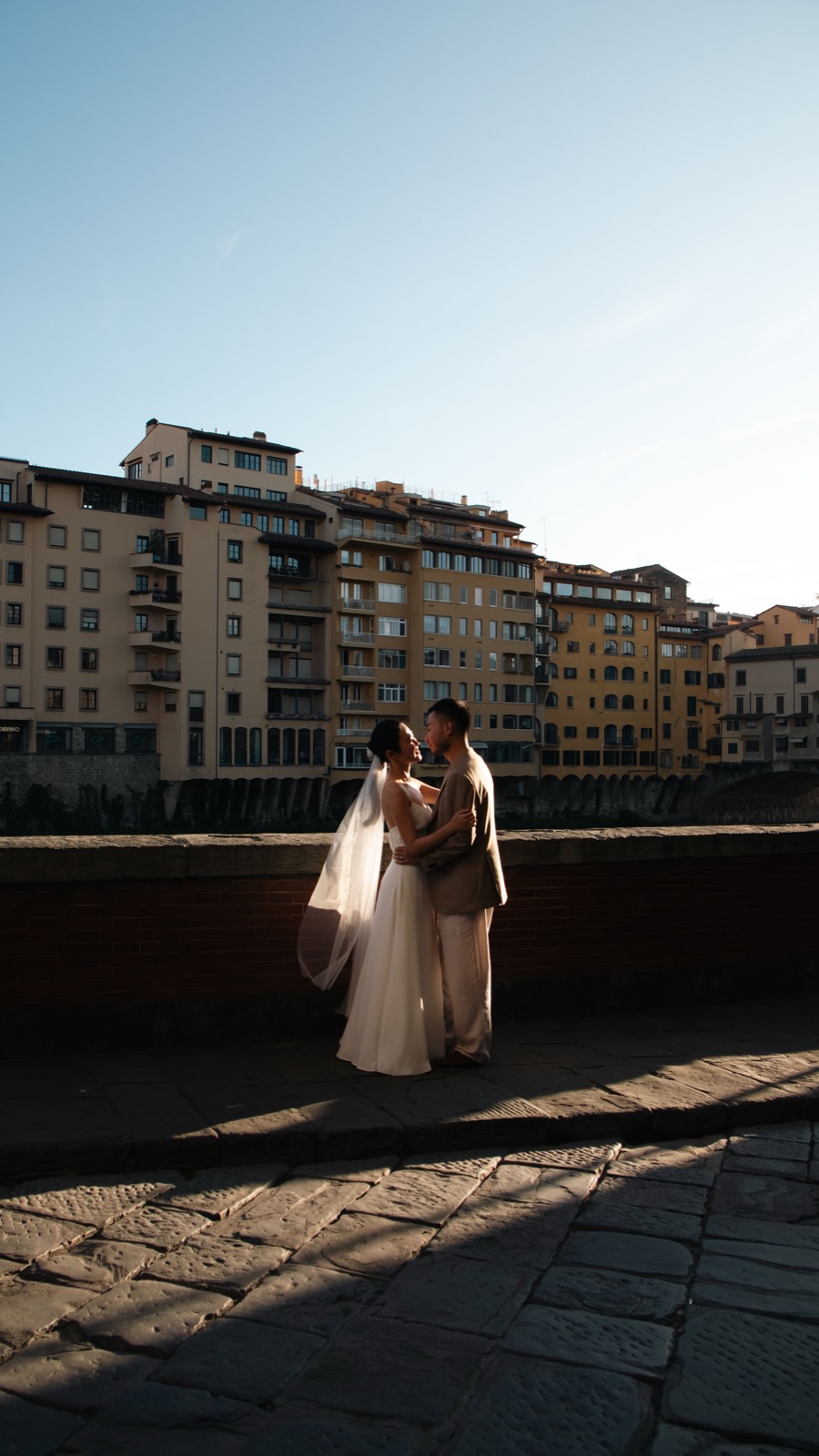
Roads, bridges and most public gardens can be used for a photo shoot without the need for authorisation, provided you do not obstruct the way and do not erect any permanent structures. For managed venues — such as certain historic gardens, terraces with views, and building courtyards — the situation varies on a case-by-case basis: sometimes advance notice is sufficient, whilst at other times a proper permit, subject to a fee, is required. There is no single rule that applies across the whole city, so the most helpful thing I can do before your wedding is to check each of the venues you have in mind on a case-by-case basis, rather than assuming that everything is always permitted or always prohibited.
If, as well as the bride and groom, a group of guests is joining you for photos around the city, it’s best to know this in advance: some venues can easily accommodate ten or twenty people, whilst others have stricter limits or require different notice periods. It’s not just a question of permits: a large group moves more slowly, and the itinerary needs to be planned accordingly – with fewer locations and more time at each one – otherwise you risk spending the day travelling from place to place rather than taking photos at a leisurely pace.
Do you already have a specific spot in mind for your photos in Florence? Let me know and I’ll check what’s needed to use it.
Florence is easy to explore on foot, but the historic centre is packed with tourists during the middle of the day, especially at weekends and during the warmer months. A well-planned itinerary takes this into account; you don’t just find out as you go along.
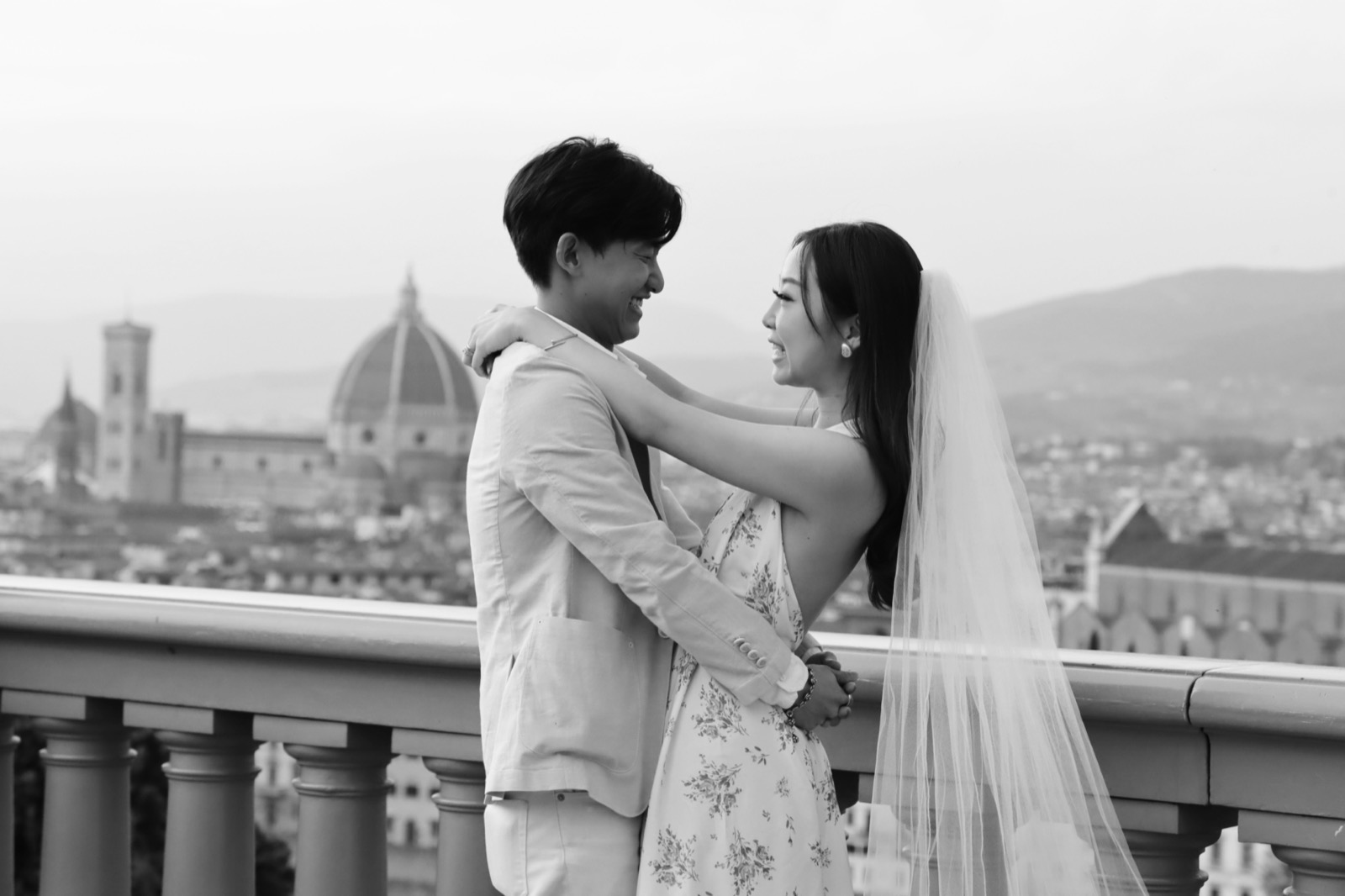
Looking at Florence on a map, it’s easy to think you could visit three or four different locations in a single morning: the Ponte Vecchio, a garden, a panoramic terrace, a square. In practice, however, between walking from one place to another, waiting for a spot crowded with tourists to clear, and the time actually needed to take photos at a leisurely pace, every additional location costs minutes that would otherwise be spent at the reception or taking portraits with the guests. I always prefer to suggest two, or at most three, well-chosen locations to be enjoyed at a leisurely pace, rather than a long list rushed through: the best photos almost always come when you’re not rushing off to the next vantage point.
Would you like some advice on which venues are really worth choosing given the time you have available? Let’s discuss it before finalising the schedule.
Not all photographers who regularly work in Florence know the city equally well: some are based here, whilst others only come here for the wedding. It’s worth asking how much experience the photographer has with the specific venues you have in mind, whether they already know what’s required to gain access to them, and how they manage tourist crowds at peak times — it’s a simple question that reveals a lot about whether the day will be organised or improvised. It’s also worth asking how travel arrangements are handled if the photographer isn’t based in the city: sometimes it’s included, sometimes it isn’t, and a proper quote will make this clear from the outset.
I often travel to Florence from the whole of Tuscany Where I work: if you’d like, I’ll tell you how I’d organise your day based on the location which you have chosen. Wedding photographer in Florence.
Florence doesn’t just have the wedding season to consider: it also has the tourist season, and the two overlap almost entirely during the busiest months.
Between May and October, the city is full of visitors, quite apart from the weddings taking place, and it is precisely during those months that the majority of the dates requested by couples are concentrated. This means two things: the most photogenic venues are booked well in advance, and a photographer who works frequently in the city already knows how to navigate the crowds even on the busiest days of the year. Booking 8–12 months in advance, as you would for a wedding anywhere else in Tuscany, remains the safest option; for the most sought-after venues within the historic centre, it is sometimes worth booking even earlier.
Many couples who get married in Florence live or get ready outside the city – perhaps in a villa or a farmhouse in the nearby hills – and then head into the city centre just for the ceremony or to have a few photos taken. It’s a choice that works well and allows you to have the best of both worlds: the tranquillity of the countryside for preparations and relaxed portraits, and Florence’s architecture for a variety of more urban photos. The important thing is to plan your travel times carefully, as journeys into the city centre can take longer due to traffic, especially during the busiest times of the day.
Do you already have a venue outside Florence for your pre-wedding shoot and want to combine it with some photos in the city? Let’s discuss it together.
Florence has the advantage, compared to many countryside locations, of offering indoor alternatives almost everywhere: porticoes, loggias and the interiors of historic buildings that can be hired by the hour. If the weather is uncertain, it’s worth having a concrete Plan B in mind, rather than just “let’s hope it doesn’t rain”: a portico near the main venue, a covered courtyard, or simply accepting that a few shots will be taken with an umbrella – which often results in more original photos than a perfectly sunny day. I always discuss this with couples before the big day, not on the day itself, because a Plan B thought through calmly works better than one improvised in the rain.
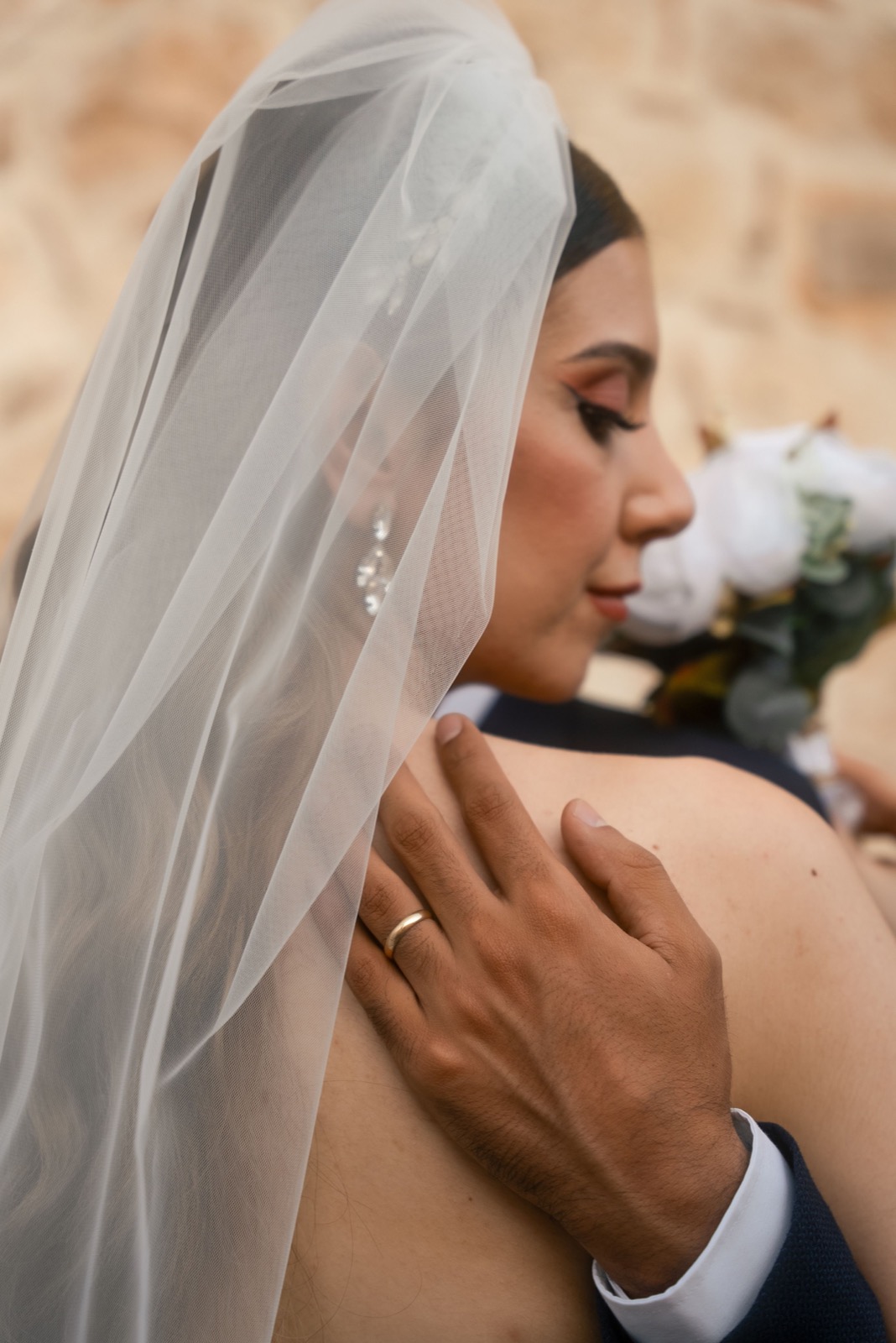
Would you like a ready-made Plan B for your venue, rain or shine? Let’s discuss it now.
Is it allowed to take photographs freely in the Uffizi, Palazzo Vecchio or other monuments? Generally not, or only with specific – and often expensive – permits: for the interiors of the most famous monuments, it is always best to check well in advance, whilst outdoor areas and streets are almost always accessible without any problems.
Is it worth getting married in Florence out of season so there are fewer tourists in the photos? Yes, the colder months or the early hours of the morning mean there are far fewer people at the most popular spots, and this is often the option I recommend to anyone who wants uncluttered photos without dozens of people in the background.
Do you need a permit even for a short photo shoot, without a drone or bulky equipment? In most cases, no – for a shoot involving handheld photography and only a few minutes on site: permits mainly become relevant for managed locations, long shoots or equipment that requires dedicated space.
Is it better to book a photographer from Florence or one from another province in Tuscany? It’s not so much a question of which province they’re from, but rather how much real experience that photographer has with the Florentine locations you have in mind: it’s worth asking them directly, regardless of where they’re based.
How long does it actually take to get from one location to another in the city centre? It depends on the distance and how busy it is, but it’s wise to always allow more time than it seems necessary when looking at a map: a walk that seems short can take quite a while when you’re navigating your way through crowds of tourists, traffic lights and the odd unexpected stop.
What happens if Florence is particularly busy on the wedding day because of an event taking place in the city? It does happen, especially during the peak season: that’s why it’s useful to check the calendar of local events in advance and always have an alternative venue lined up – one that’s less well-known but just as photogenic – to suggest if your first choice turns out to be too crowded.
Is it best to take photos at dawn to avoid the tourists altogether? For those who want completely uncluttered shots, yes: some couples choose to set aside a morning, either before or after the wedding, for a dedicated photo shoot in the early hours of the day, when the city is almost deserted. It isn’t essential, but it’s an option worth considering if the location you love is always very busy.
Do you need to book a wedding in Florence further in advance than in other provinces of Tuscany? Not necessarily for the photographer, but often for certain venues in the historic centre, which receive enquiries from both couples getting married and organisers of tourist or cultural events: if you already have a specific venue in mind, getting started early will help you avoid any unpleasant surprises.
 Italian Italian
 English