2 November 2026
Wedding

- Home
- About me
-
Services
Add memories of every moment
Giovanni PapiniTHE SERVICES I OFFER - Projects
- Print Online
- Contact me


Choosing a photographer is one of those decisions that people tend to put off the longest, and it’s easy to see why: it seems to be all down to personal taste, until you realise that there are also very practical considerations involved — who will actually be there on the day of the event, what happens to the files afterwards, and how long you’ll have to wait to see the photos. In this guide, you’ll find out how to assess a portfolio without being swayed by the most stunning photos, the questions to ask before signing a contract, and the signs that a quote is more vague than it should be.
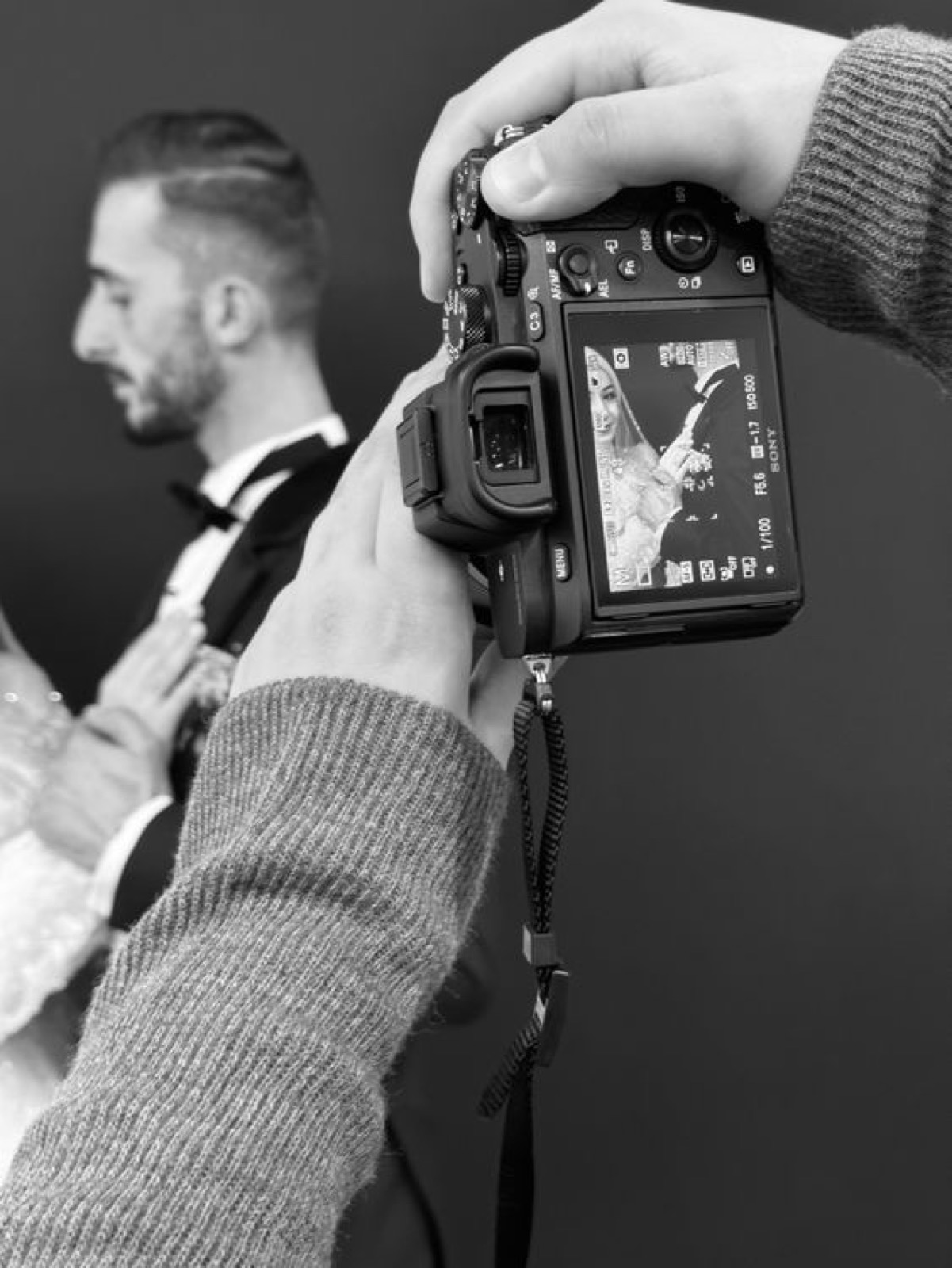
A well-curated portfolio always showcases the best photos: that’s only to be expected – that’s what it’s there for. The point is to look at it and ask yourself not just “do I like this photo?”, but “would I have enjoyed the day it was taken on?”.
There are photographers who work almost exclusively with posed shots, pausing the ceremony and reception to create perfect shots, and photographers who work in a reportage style – that is, they capture what is happening without interrupting it, reserving posed shots solely for portraits of the bride and groom and their family. It’s not a question of technical skill, it’s a matter of style: when you look at a portfolio, you’ll immediately realise which of the two you’ll be dealing with on your wedding day, and it’s important that it’s the style you really want, not the one you’ve seen a friend use.
If a photographer is able to do so, ask to see a complete photo shoot, from start to finish, not just the selection of the best photos that you usually see online. That’s where you can really see how they work during the quiet moments – the times when nothing special is happening but which make up the bulk of the day: how they handle the waiting periods, whether they manage to capture the details, and whether the quality remains consistent from the first photo to the last.
Would you like me to show you the full service, not just the selection? Drop me a line and I’ll show you.
There are questions that seem obvious but which, in fact, can make a big difference to the outcome of a photo shoot. It’s worth asking them all, even if the answer seems obvious.
Some photography studios market their services under the owner’s name but then send a different photographer on the day of the event – perhaps someone younger or less experienced. This isn’t necessarily a problem, but it’s good to know in advance: if you’ve chosen a photographer based on their portfolio, you’ll want to be sure that it’s actually them taking the photos, or at the very least know who will be standing in for them.
If the number of photos delivered is too high – in the thousands – this often indicates a lack of careful selection: almost identical photos, blurred shots or photos with closed eyes are included simply to inflate the total number. Ask how the selection process works and how many photos, on average, make it into the final delivery: it’s a more honest indicator of the quality of the editing work than it might seem.
Delivery times vary greatly from photographer to photographer, and also depend on the season: during the busiest months, photographers who are working on several weddings at the same time may take longer. Ask for a realistic timeframe, not the best possible one, and check whether it is set out in the contract or remains a verbal promise.
You want to know whether you’ll receive high-resolution, print-ready files, or just a compressed version for the web. And you’ll want to know what you can do with those photos: whether you can print them wherever you like, whether you can share them freely on social media, and whether the photographer will use them in their portfolio or on their own channels without your consent. These are details that rarely come to light unless you ask about them first.
What happens if it rains on the wedding day, if the photographer falls ill, or if one of the two scheduled photographers is unable to attend? A reputable professional will already have a Plan B in place – this might be a trusted colleague ready to step in, or simply the experience to handle bad weather without almost anyone noticing. If the answer is vague, it’s a warning sign you shouldn’t ignore.
Just as important as what’s included is knowing what isn’t. A drone, a second photographer, a printed album, extra hours beyond those agreed: these are items that many studios charge for separately, and rightly so – but only if they tell you about them beforehand and you don’t just discover them on the final invoice. Asking explicitly, “What isn’t included in this price?” is one of the simplest questions – and yet one that’s most often overlooked – because it almost seems impolite to ask; yet it’s precisely what distinguishes a transparent quote from one that only looks good on paper.
Do you have any other specific questions about your particular case? Please let me know, and I’ll take the time to reply before I even send you a quote.
A good quote should read like a list of specific items, not just a single figure accompanied by adjectives. When this clarity is lacking, it is usually because nobody has taken the time to break it down, not because there is anything to hide — but it is nonetheless a warning sign that should not be ignored.
A fixed package, which is the same for every wedding, is easier to sell but less suited to a specific wedding: you might end up paying for hours you won’t use, or find that something you actually needed is missing. A quote tailored to your day — the timetable, venue, number of guests, and exactly what you want photographed — takes longer to put together, but is almost always a fairer deal.
Google star ratings mean little on their own: what matters is reading what couples actually say, and, if possible, asking to see a full portfolio of a wedding similar to yours in terms of style or venue. If a photographer is happy to show you this without any fuss, it’s already a good sign of the transparency with which they work.
If you’d like, I can show you some case studies and details of our full wedding services in Tuscany before you make your decision. Wedding photographer in Tuscany — Photo shoots.
If, on the other hand, you want to start by setting a budget, in the article on How much does a wedding photographer cost in Tuscany? You can find the price ranges and see how a quote is broken down item by item.
How many photos should I expect to see in a portfolio before making a decision? It’s not so much the number that counts, but the variety: it’s better to see two or three complete sets of photographs, covering the whole day from start to finish, than dozens of individual shots selected one by one from different weddings, which don’t really say much about how the photographer actually works over the course of a whole day.
Is it a problem if the photographer works on their own, without a second photographer? It isn’t a problem in itself: it depends on the size of the wedding and how many moments are likely to happen at the same time. For smaller ceremonies, a single photographer is more than enough; for larger weddings, with more guests and more venues, having a second photographer ensures that nothing is missed.
Is it best to choose the cheapest photographer from among those you like? It’s best to choose the one that offers the service best suited to what you really want, at a price that reflects that service. The absolute cheapest option often means fewer hours, a smaller selection or longer delivery times: that’s fine if it’s a conscious choice, but not so good if you only realise it afterwards.
How far in advance of the wedding should you start looking for a photographer? For weddings between May and September, it’s best to start looking at portfolios and contacting the first few photographers 8–12 months in advance: these are the dates that get booked up first, and waiting too long reduces your options – not just in terms of price.
What happens if, after signing, I change my mind about something – for example, if I want to add a video? In most cases, you can always add a service whilst the work is in progress, provided there is availability: this is another good question to ask before signing, to find out how much notice you need to give for a change of this sort.
Does it make sense to rely solely on online reviews without ever speaking to the photographer first? Reviews help you get an initial idea, but they’re no substitute for a face-to-face chat: it’s in that conversation, rather than in the Google ratings, that you’ll realise whether the working style and personality of the person who’ll be photographing your wedding are the right fit for you. Be wary of anyone who avoids speaking to you beforehand, perhaps constantly referring you to a written quote without ever making a phone call or arranging a meeting.
How important is personal chemistry compared to photographic style? It matters more than you might think, because you’ll be spending a whole day together, often during the most intimate and informal moments. Two photographers with a similar style can offer you very different experiences on the day itself: if you don’t feel at ease during your first meeting, that’s a sign you should heed, even if you like their portfolio.
Is it normal to feel self-conscious in front of the camera? What can you ask the photographer about this? It’s perfectly normal, and a good photographer knows how to handle it: you can ask them directly how they work with couples who feel uncomfortable posing, and whether, in their experience, reportage photography – which doesn’t require looking directly at the camera – helps to ease this awkwardness more than traditional photos.
 Italian Italian
 English