2 November 2026
Businesses/Sport

- Home
- About me
-
Services
Add memories of every moment
Giovanni PapiniTHE SERVICES I OFFER - Projects
- Print Online
- Contact me


A corporate event takes weeks to organise and is over in a matter of hours: that’s why photographs are the only thing that really remains, apart from the memories of those who were there. In twenty years of working in Tuscany, I’ve photographed conferences, team-building days and corporate portrait sessions, and every time the starting point is the same: what really needs to be photographed, and how to organise the day so that the photographer doesn’t become a hindrance. In this guide, you’ll find my approach to covering a corporate event, from speakers on stage to team portraits, right through to what to ask before booking.
A conference or convention isn’t photographed in the same way as a wedding: there’s no set script, and the day’s programme can change at the last minute. What matters is to be clear, before you start, about which moments the company really wants to capture, because these often don’t coincide with what an outside observer would instinctively photograph.
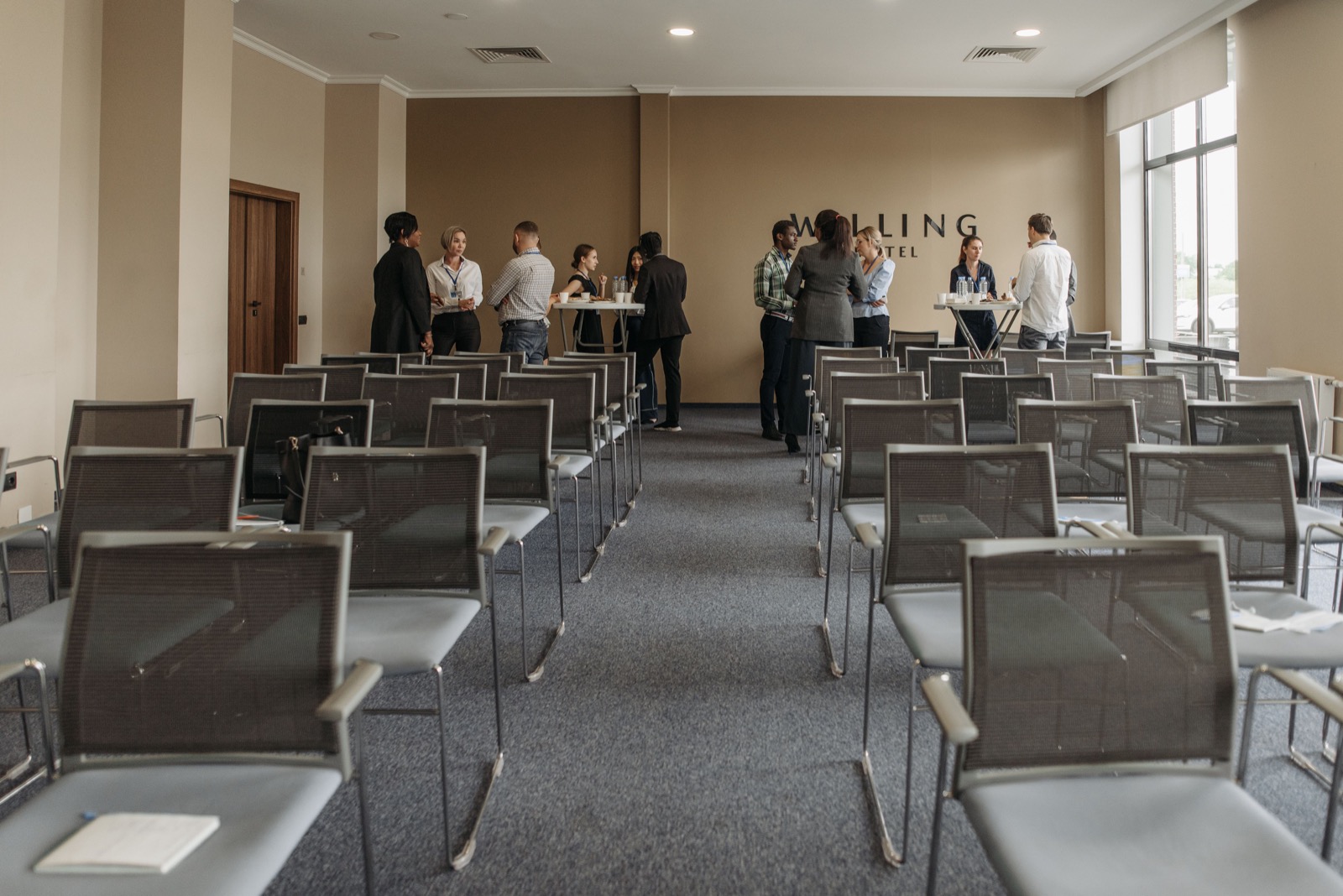
The stage with the speakers is only part of the story: just as important are the audience listening in, the networking opportunities during the breaks, and the details of the set-up that reflect the care taken in the organisation. I work in a reportage style here too, in the same way that I photograph a wedding: without interrupting anyone, seeking out the moments that actually happen rather than having them re-enacted in posed shots. A well-composed shot of a slide with the speaker beside it, a question from the audience, a handshake during the coffee break: it is these details, rather than the customary “everyone on stage” photo, that give those who weren’t there a real sense of how the day actually went.
A corporate portrait needs to work across multiple channels: the website, LinkedIn, press releases, and sometimes even in print for a leaflet. This means paying careful attention to the background and framing with an eye to where the photo will end up, not just how it looks at the moment the shot is taken. Often, during a corporate portrait session, I photograph dozens of people in just a few hours: you need a quick and repeatable method — the same lighting, the same distance, the same background for everyone — not just the odd good shot here and there; otherwise, the final result looks like a collection of photos taken on different days rather than a single, coherent session.
Before the first guests arrive, there’s always a brief window of time when the venue is ready but still empty: this is the perfect moment to photograph the set-up, the décor, the logos and the items on the tables. These are shots that seem secondary on the day itself, but which often become the most widely used images for promoting the event on websites and in catalogues, precisely because they are clean and free of people rushing about in the background.
It depends on how the day is structured, not on its duration on paper. A half-day conference with a single stage may only require a few hours focused on the opening, keynote speeches and closing; a convention taking place across several rooms simultaneously, with parallel workshops and an evening programme, requires more hours or more than one photographer, because no one can be in two places at once. It’s one of the first things I ask when I receive an enquiry: not “how long does the event last?”, but “what’s happening, and where, at each point in the day”.
Are you organising a conference or a corporate event? Tell me about the programme and I’ll put together a bespoke proposal for you.
Team-building days are the most unpredictable events to photograph, because something different happens every hour: outdoor activities, team games, social moments. It is precisely this unpredictability that makes them, almost without exception, the most widely shared content on corporate social media, far more so than the formal moments of a conference.
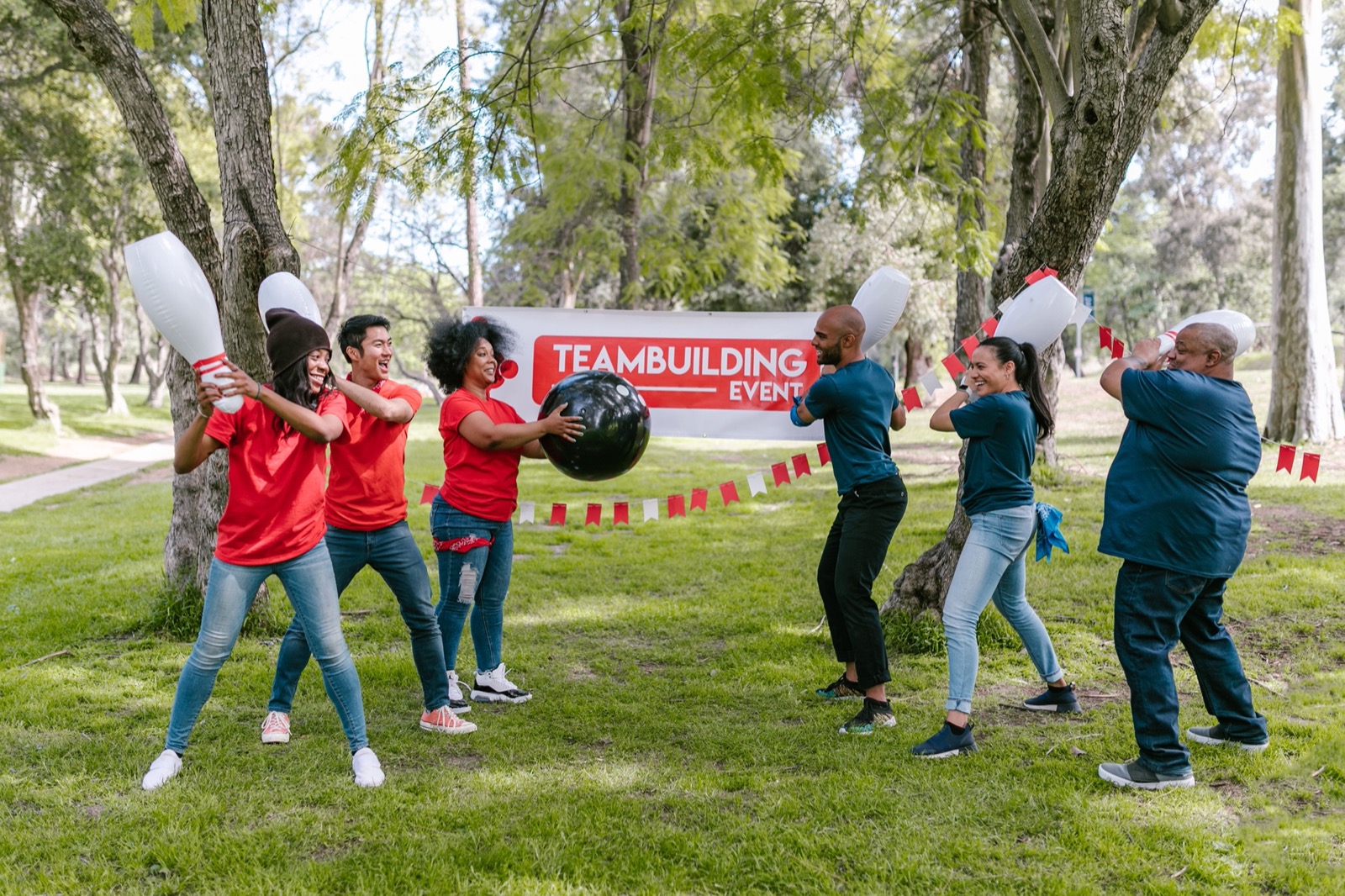
Those in charge of a company’s communications need the photos whilst the event is still a hot topic, not two weeks later when attention has already moved on. For this reason, on request, I deliver an initial selection of photos ready for social media within 24–48 hours of the event, whilst allowing sufficient time for the full selection and editing of all the material. This is not an optional service: it needs to be organised in advance, because editing a small, high-quality selection quickly requires time set aside immediately after the event, rather than squeezed in between one job and the next.
More and more companies are asking for a short video summary of the day, as well as photos: just a few seconds of highlights designed for social media, not a documentary. Taking photos and filming at the same time requires organising the day differently from a photography-only shoot, because some shots that work for a photo don’t work for a video, and vice versa. If this is something you’re interested in as well, it’s best to mention it in advance, rather than adding it at the last minute.
A wedding follows a recurring pattern: ceremony, reception, photos. A corporate event does not: it varies depending on the sector, the number of guests, and what the company wishes to communicate afterwards. That is why I prefer to base each quote on the actual programme I am given, rather than offering a fixed package which ends up charging for unnecessary hours to those with a short event, or failing to meet the needs of those with a more complex one.
A corporate event involves more people and more suppliers than a wedding: that’s why it’s worth taking a few minutes, before the day itself, to draw up a schedule and share it with the photographer.

A written brief – even a brief one – listing the key moments not to be missed and the day’s schedule prevents the photographer from discovering on the spot that the most important speaker is speaking just as they were taking photos during the coffee break. Having a single point of contact within the company, whom you can ask in real time if there are any changes to the programme, makes all the difference between well-organised coverage and constantly having to scramble to keep up with last-minute changes.
Having worked across all the provinces of Tuscany, I have photographed corporate events in a wide variety of settings: hotels with conference rooms, villas converted to host conventions, and the companies’ own industrial premises opened up for the occasion. Each venue has its own constraints in terms of lighting and space, and this is another reason why a quick site visit – even if it’s just looking at photos and a floor plan in advance – helps to ensure you don’t discover on the day that the main hall has backlit windows that ruin every photo taken from the stage.
As well as individual portraits, many companies request a group photo for each department or for the entire office, often to be used for the organisation chart published on the website or for internal materials. These shots may seem simple but require organisation: you need a sufficiently large space, even lighting and, above all, for everyone involved to be free at the same time – something that, in a company with different shifts and departments, needs to be planned well in advance.
Before confirming, it’s worth asking: how many hours of coverage are included; whether a second photographer is provided for events with multiple venues or simultaneous activities; in what format the files will be delivered (for the web, for print, or both); and what the turnaround times are for the full set of images, as well as any quick selection for social media. These are the very same questions I would ask if I were on the other side, organising the event.
How much does a photographer cost for a corporate event? It depends on the number of hours covered, the number of staff and any extras such as video or fast delivery for social media: there isn’t a set price, but a quote based on the actual schedule for the day. The best way to find out is to tell me about the event so I can prepare a bespoke quote for you.
Do you need a different photographer for a conference and for a team-building event? You don’t need a different photographer, but a different approach: a conference requires you to follow a stricter programme (stage, presentations, fixed timings), whilst a team-building event requires you to be ready to capture the unexpected, because the programme is more fluid. It’s the same reportage skill applied in two different contexts.
Can we get the photos during the event, not just afterwards? On request, yes: for events that require real-time social media updates, I can select and edit an initial batch of photos within a few hours, whilst the rest of the material will be fully selected in the days that follow.
What happens if the programme changes at the last minute? This happens quite often, especially during team-building events: that’s why it’s useful to have a single point of contact on site who can keep me updated in real time. A photographer experienced in reportage is, in any case, used to adapting even when the schedule changes at a moment’s notice.
Is it worth taking photos of past editions as well, or just today’s event? If this is the first year you’re documenting the event, you’re starting from scratch – and that’s perfectly fine; if, on the other hand, it’s a recurring event, it’s worth maintaining a consistent style from one edition to the next, so that over time you build up a photographic archive that tells the story of the company’s growth, not just that of a single day.
Do you already have a date or a rough programme? Drop me a line and let’s discuss how to cover the event, from the speakers to the team portraits.
 Italian Italian
 English